Tag: Young People

Support for children and young people (children) and strengthening their voices

The Attorney-General, the Hon Mark Dreyfus KC MP, has requested the Family Law Council provide advice aiming to improve support for children and young people in accessing appropriate support services and participating in the family law system. The report outlines the history and current understandings of the application in laws, policy and practice of children’s rights, including Article 12 of the UN Convention on the Rights of the Child.

Child and youth friendly justice for the climate crisis: Relying on the UN Convention on the Rights of the Child

The climate crisis is a human rights crisis, and one of the worst affected groups is children and youth. This same group has been key to climate action in and outside of the courts. As well as engaging in numerous consultative fora such as COP, and in the introduction of a General Comment on the right of children to a healthy environment, they have gone on to become key litigators in climate cases/applications at both national and international level. These justice processes are, however, notoriously ill suited to the particular needs of children and youth. Child friendly justice is a concept which has been elaborated in recent years by the Council of Europe. Yet climate litigation is very different to the cases (e.g. in family law) in which children have traditionally been parties – amongst other things it can involve very public campaigns. This article considers child and youth friendly justice in the context of the climate crisis through the UN Convention on the Rights of the Child, and through the concepts of access, participation, interests, and judgments.

Children’s participation in international fora: The experiences and perspectives of children and adults

Children and young people are increasingly participating in events organised by international organisations. In spite of a growing body of research on children’s participation in decision-making, little is known about their experiences and the perceptions of adults who attend. This article compares the experiences of 16 children and 12 adults who participated in high-level global events. Three themes were identified, Representation, Capacity and Impact. Findings suggest that while children and adults identified similar opportunities and challenges for meaningful participation, children’s perceptions of their engagement differed from adults’ in that they were more likely to be positive about the value of their contribution.

Child participation in decision making: Implications for education and beyond

Child empowerment is on the policy agenda of education systems around the world, in particular since the increasing emphasis in policy and research discourse on supporting children’s participation rights. A large body of literature suggests that child participation in making decisions on matters that affect them is not only essential from a child rights perspective, but also that it is associated with several positive outcomes from the individual to societal level. In OECD countries there are many domains in which children can and do actively participate in making decisions, including regarding their education. This paper explores how and where children can participate in decision making, with a focus on policies and practices in OECD education systems. It outlines key considerations for child participation, including barriers that many systems are struggling to overcome.

Journal of Children and Media – There is no right age! The search for age appropriate ways to support children’s digital lives and rights

In a digital world, certain milestone birthdays define childhood experiences. The age of 13 is commonly dubbed “the age of digital consent” and embedded in the terms and conditions of social media platforms, although data protection regulation may set an older age limit for companies to profile children. For access to “adult” products and services such as pornography or gambling, 18 is the recognised age barrier. Three critical questions arise: (i) Are age limits the optimal way to regulate children’s digital experiences? (ii) Does such “bright line” regulation select the “right” age, according to evidence from the field of children and digital media? (iii) Does it matter that age limits are widely contested and often poorly implemented?

In this provocation, we acknowledge but also question calls from parents and politicians for researchers to determine the “right age” for children to get their first smartphone, access social media, or decide their online activities without parental monitoring. These calls are often expressed negatively – should society ban “under-age” children from various aspects of the digital world? Whether the focus is on access or restriction, these are calls for simple answers that lead to more, often problematic questions: Who should manage this and how? Is the “right age” for parents to determine, governments to put into law, or companies to decide according to their interests?

For many academics, these are the wrong questions – too reductive of the pros and cons of digital access, insensitive to the heterogeneity among children, naïve about the practical efficacy of bright-line rules or bans, and deaf to the voices of children and young people. Moreover, it is near impossible to channel the complex and uneven body of available evidence about children’s encounters with risks of harm towards a straightforward consensus regarding any “right age.” Researchers recognise the host of risk and protective factors shaping children’s digital lives, so researchers prefer to answer – it depends. Or, as danah boyd (2014) powerfully argued a decade ago, it’s complicated.

To navigate both academic commitments and public concerns, we deploy a children’s rights framework to evaluate milestone birthdays as they are applied to the digital environment and highlight emerging alternatives that seek to redesign digital policy and practice in age-appropriate and child-rights-respecting ways.

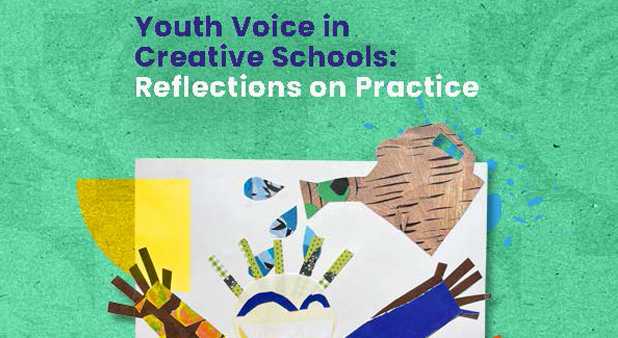
Youth Voice in Creative Schools: Reflections on Practice

This publication is an attempt to capture, celebrate and share ways of working, reflections, ideas, and challenges that have been part of the journey of many Creative Schools. The articles provide a snapshot of the hundreds of projects and programmes which have creatively raised children’s voices. Of course, consultation with children and young people has been a feature of arts in schools and arts in other places for a long time but the scale and reach of Creative schools since 2018 has given us this opportunity to bring together some examples of recent practice, which we offer to anyone with an interest in this area. 

Participation in Practice in Child Welfare: Processes, Benefits and Challenges

Internationally, there has been a significant focus in policy and practice on the participation of children and young people in decisions that affect them, underpinned by respect for their rights under Article 12 of the UNCRC. While children’s participation has become a core focus for practice improvement in child welfare services, there is a dearth of practical examples of how participation is implemented in organisations. In this paper, we provide a reflective case study of participation in practice in the Youth Advocate Programme (YAP) in Ireland, a large non-profit child welfare organisation. YAP Ireland works with young people who are considered ‘high risk’ using a strength-based approach in a wraparound service that is family-driven and youth-guided. Drawing on qualitative interviews and focus groups with young people, parents, advocates, and staff and management, we describe and critically analyse YAP’s approach to participation. Critical factors in practice include a commitment to participation in policy, practice and culture at all levels of the organisation and scaffolding of participation by staff. Challenges include ensuring that participation principles are upheld consistently across the organisation and resourcing participation.