Author: Caoimhe-Hub

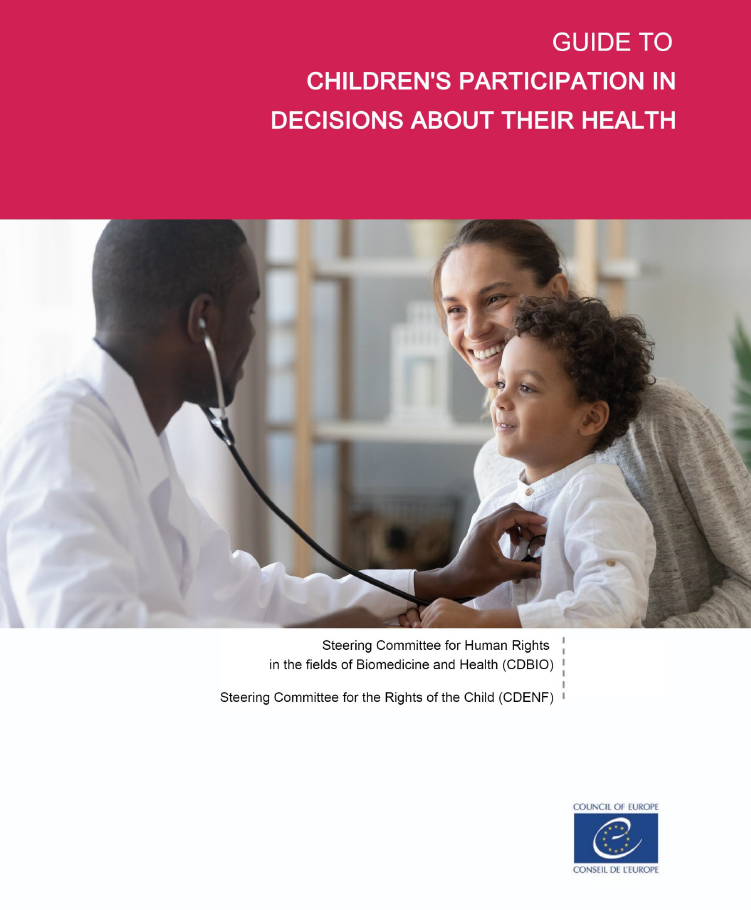
Guide to Children’s Participation in Decisions About Their Health

The Guide provides information and advice, primarily for healthcare professionals, about how to involve children in decision-making processes regarding their health. It starts by presenting the theoretical and legal context and progresses to describe important components of the decision-making process, helping health professionals to understand their role in supporting children, families, and other professionals to enact this in practice. Key concepts of consent, assent, and ‘best interests’ are discussed, as well as common healthcare situations where participation in decision-making may sometimes be perceived as more challenging. Examples and links to good practice are provided throughout.
Support for children and young people (children) and strengthening their voices

The Attorney-General, the Hon Mark Dreyfus KC MP, has requested the Family Law Council provide advice aiming to improve support for children and young people in accessing appropriate support services and participating in the family law system. The report outlines the history and current understandings of the application in laws, policy and practice of children’s rights, including Article 12 of the UN Convention on the Rights of the Child.

Child and youth friendly justice for the climate crisis: Relying on the UN Convention on the Rights of the Child

The climate crisis is a human rights crisis, and one of the worst affected groups is children and youth. This same group has been key to climate action in and outside of the courts. As well as engaging in numerous consultative fora such as COP, and in the introduction of a General Comment on the right of children to a healthy environment, they have gone on to become key litigators in climate cases/applications at both national and international level. These justice processes are, however, notoriously ill suited to the particular needs of children and youth. Child friendly justice is a concept which has been elaborated in recent years by the Council of Europe. Yet climate litigation is very different to the cases (e.g. in family law) in which children have traditionally been parties – amongst other things it can involve very public campaigns. This article considers child and youth friendly justice in the context of the climate crisis through the UN Convention on the Rights of the Child, and through the concepts of access, participation, interests, and judgments.

Children’s participation in international fora: The experiences and perspectives of children and adults

Children and young people are increasingly participating in events organised by international organisations. In spite of a growing body of research on children’s participation in decision-making, little is known about their experiences and the perceptions of adults who attend. This article compares the experiences of 16 children and 12 adults who participated in high-level global events. Three themes were identified, Representation, Capacity and Impact. Findings suggest that while children and adults identified similar opportunities and challenges for meaningful participation, children’s perceptions of their engagement differed from adults’ in that they were more likely to be positive about the value of their contribution.

How to do the CRWIAs The Right Way – A young people’s guide to doing Children’s Rights and Wellbeing Impact Assessments

The Right Way is a project from SYP to support and challenge decision makers in Scotland to meaningfully engage young people in their work. How to do CRWIAs The Right Way is a young people’s guide to help decision makers create ambitious CRWIAs that champion and advance young people’s rights in Scotland.

Child participation in decision making: Implications for education and beyond

Child empowerment is on the policy agenda of education systems around the world, in particular since the increasing emphasis in policy and research discourse on supporting children’s participation rights. A large body of literature suggests that child participation in making decisions on matters that affect them is not only essential from a child rights perspective, but also that it is associated with several positive outcomes from the individual to societal level. In OECD countries there are many domains in which children can and do actively participate in making decisions, including regarding their education. This paper explores how and where children can participate in decision making, with a focus on policies and practices in OECD education systems. It outlines key considerations for child participation, including barriers that many systems are struggling to overcome.