
Young Voices on Communicating Physical activity: How Secondary School Students Co-created a Toolkit for the ‘Active Schools Flag’ programme
Background information:
The project on which we involved young people in decision-making:
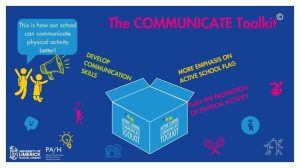
The COMMUNICATE study was a project led by the University of Limerick to establish how to effectively communicate physical activity messages with young people. The project’s purpose was to create a toolkit to help schools effectively communicate physical activity messages with students as part of the Active School Flag programme.
The topic on which we were looking for their views:
Through a number of co-creation workshops, young people shared their views on how to improve the communication of physical activity messages with students in secondary schools. This ultimately contributed to the development of a toolkit that supports schools with their whole-school physical activity programme.
The reason we wanted their views:
We wanted to co-create a relevant, practical, and lasting toolkit by involving its young users from the very beginning.
The decision makers who facilitated and listened to their views:
A steering group facilitated and listened to their views, and included two secondary school students (Lauren and Sam), one member of school management, one teacher responsible for programme delivery, one service provider, and two researchers. Caera Grady, who was the project lead and the main facilitator at the co-creation workshops, was part of the steering group.
The decision makers responsible for acting on their views:
The project lead and the steering group were responsible for acting on the young people’s views. The project lead was responsible for analysing and presenting the young people’s views to the research steering group. This group then made decisions about updating and changing the COMMUNICATE toolkit based on the young people’s views and opinions.
The age profile of the young people:
The young people involved were secondary school students, ranging from approximately 13 to 17 years old. Other relevant information about the young people: Students involved in the co-creation workshops were from four Active School Flag schools in County Dublin, including two girls-only, one boys-only, and one mixed DEIS school. Lauren and Sam were from a rural school in County Tipperary. Throughout the write-up of this good practice example, Lauren and Sam, the student representatives from the steering group, provide their perspective on how young people were involved in decision-making.
How the young people were ensured SPACE, VOICE, AUDIENCE and INFLUENCE
Space: 

How we ensured a safe and inclusive space to hear the views of young people
| Things to consider | What we did |
| The space or setting where we got their views | To ensure comfort and encourage participation, young people attended three workshops, with the first two held in their familiar school environments. The final workshop took place at the University of Limerick, which Lauren, a student representative, noted was the “right order”. She explained that if they were brought to the university first, they “would definitely be shy” but by being in their own school first, “they already understood it because they were comfortable”. The final workshop at the University encouraged connection and idea-sharing after the students had become comfortable with the process in their own schools. |
| How we identified the young people to be involved
| Schools that had been involved in the Active School Flag programme for a minimum of three years were identified and invited to take part. It was not feasible for all students in each school to participate. From each school, the teacher who coordinated the Active School Flag programme invited students from different year groups with experience of the topic to take part in the workshops. These students had the choice to opt in or out, and all were clearly informed that their participation was voluntary and that they could withdraw at any time. |
| How we involved those who were directly affected by the topic
| All students in the workshops were directly affected by the topic, as they were either peer leaders running communication campaigns or programme recipients receiving messages about physical activity. Lauren and Sam were also peer leaders, making the topic highly relevant to their experiences. |
| How early in the process they were involved in decision-making | Young people were involved from the very beginning of the project. The project began in September 2023. Lauren and Sam met with other steering group members at its inaugural meeting in November 2023. This group planned the co-creation workshops, which involved a wider student cohort and ran from January to May 2024. Sam commented that the timing was successful because they “figured out the structure before you went out into schools”. He added that there was “no point just going out blind or not knowing what to ask them or talk to them about” and that he and Lauren “still had their perspective then” at the steering group meetings. The final draft of the toolkit was established after the final workshop in May 2024. |
| How the process was inclusive and accessible | The study was designed to be inclusive by inviting a diverse group of young people (aged 13-17) from various school types to participate. To facilitate meaningful engagement and informed decision-making, baseline knowledge was provided at the start of each session. We ensured consistent involvement by holding repeated workshops with the same young people. For example, when two schools couldn’t attend the final workshop at the University, the facilitator travelled to them on a separate day to ensure their contributions were included. During the interactive co-creation workshops, young people shared their views and opinions through various activities such as writing, drawing, brainstorming, rating resources, and group discussions. As Lauren observed, “getting them to write suggestions and stuff like on those pages, throwing down any thoughts, helped because if they don’t want to speak out straight away, at least they have ideas written down.” |
| How we made sure they felt safe to express their views | To ensure a safe environment, each workshop began with an ice-breaker activity. At the first workshop, young people collaboratively decided on a ‘group agreement’ with the facilitator to ensure everyone felt included and supported. The group agreement was shared as a reminder at the start of subsequent workshops. The project lead was the main facilitator and consistent across all workshops to build rapport and trust. As Sam observed, by the third workshop, the students were “more comfortable to express a lot, they wanted to talk”. The final workshop included all steering group members (the decision-makers), who introduced themselves and worked with the young people to capture their ideas and opinions. The ice-breaker for this session focused on students and steering group members getting to know each other. |
Voice: 

How we gave young people a voice in decisions
| How we informed young people about the topics on which we wanted their views | The first workshop provided an overview of the project’s purpose and goals, defined everyone’s roles and responsibilities, and provided students with the necessary information in youth-friendly and age-appropriate language to support meaningful participation. The project lead used physical resources or objects to help explain difficult concepts when possible. An early exercise involved mapping current physical activity communication methods within their school, which served as the foundation of the group’s knowledge and was referred to throughout. Each subsequent workshop started with a reminder of the study’s purpose and the day’s objective. |
| How we made sure they knew their views would be taken seriously | Students were consistently informed that their ideas would be combined with those from other schools involved to create the toolkit. They were informed that their views would be recorded and shared with the steering group, who would then create a draft version of the toolkit. The draft was then shared with the students for further input. This process was repeated three times. |
| How we informed them about level of influence they could have on decision-making | From the outset, the young people as co-creators were informed that the ideas and suggestions across all schools would be pooled to create the COMMUNICATE toolkit. Different forms of communication were used to inform the young people throughout the project such as, visual and verbal presentations, physical resources and 3D prototypes of the toolkit. They were informed that they were the ‘experts’ on the topic within their school setting, and their insights would help future schools. The value of their suggestions was consistently demonstrated at each follow-up workshop by directly showing how their ideas were developed into practical aspects of the toolkit. |
| The methods we used to get their views, and why | A diverse range of interactive activities, like writing, rating, labelling, drawing, brainstorming, and group discussions, were used. Lauren noted that having the option to write down suggestions was helpful for those who might not want to speak out immediately. |
| How we made sure they could identify topics they wanted to discuss | Young people were provided with open questions and activity sheets. Unique ideas were then brought to larger group discussions for broader input from the group. |
| The topics and issues they raised | Young people identified a need for practical tools, resources, and guidance for better physical activity communication. This included suggestions related to raising awareness, planning, communication skills development, and using inclusive language. |
Audience:

How we made sure there was an audience (decision-makers) for young people’s views
| How we developed a report or record of the young people’s views | All suggestions were recorded at each workshop through the activity recording sheets and facilitator notes. The steering group then reviewed and grouped suggestions to generate key themes after each workshop. |
| How we checked back with them that their views were accurately represented | At subsequent workshops, young people were reminded of their initial suggestions and informed about the key themes. There was another opportunity to suggest any additional tools and resources before reviewing each aspect of the draft toolkit and suggesting improvements. Each subsequent toolkit iteration was cross-checked against original suggestions and themes by the steering group to ensure their views were maintained. |
| How we involved the decision-makers who are responsible for influencing change | The research steering group, as the decision-makers, met monthly. Their involvement spanned from the initial planning, including the design of the student workshops, to the final toolkit drafting. Student suggestions were given significant consideration during the various toolkit versions. Additionally, Lauren and Sam helped analyse and translate the views of other students into key themes for the initial toolkit draft. |
| How we and other decision-makers showed our commitment to listening to, and acting on young people’s views | The consistent presence of the project lead at all workshops fostered a strong rapport. The project lead introduced the steering group to the young people at the start of each workshop via a photograph and reminded the young people about the steering group’s commitment to take their views seriously. Young people were regularly informed that their views would be shared with the steering group and taken into account in decision-making. At subsequent workshops, the students were directly shown how their input was used in the draft version of the toolkit. At the final workshop, all steering group members were present, helped facilitate, and verbally reiterated their commitment to taking the young people’s views seriously. |
| How we supported young people to play a role in communicating their own views to decision-makers | The final workshop used a carousel style, allowing young people to directly engage with each steering group member at different tables. Young people had various opportunities to express their views using a variety of methods such as drawing, rating, and group discussion. A teacher was present to offer additional support. Importantly, Lauren and Sam directly contributed to analysing and translating the views of other students into actions and participated in steering group meetings to present their perspectives to the wider decision-making group. |
Influence:

How we made sure that young people’s views were taken seriously
| How young people were given updates at key points in the development of the project | Each workshop began with a reminder of previous discussions. At each follow-up workshop, young people were directly shown how their previous ideas were used to develop practical aspects of the toolkit. Each workshop concluded with next steps and future plans. Sam noted that between each of the workshops, when the steering group considered the students’ suggestions, “you can see something was changed in the toolkit from the previous week, so they were listened to throughout, not just at the end”. This demonstrated that their voices were being heard and their ideas were taken seriously. |
| How their views were acted on by the appropriate decision-makers | Young people’s suggestions were compiled across schools to shape the toolkit. Drafts were then developed and reviewed by the steering group and the young people. Sam added, “their perspective is taken in all the time and they had an equal say in everything. What we said was taken into consideration, and we could see our suggestions were used and put forward.” |
| How they were given full and age-appropriate feedback explaining how their views were used (or not) and the reasons for decisions taken | Draft versions of the toolkit were presented and explained in youth-friendly language in subsequent workshops. Physical resources were used to help explain how their views were used. For example, a large metaphorical “toolkit” box was introduced at the first workshop for the young people to deposit their suggestions for the toolkit and at the final workshop, the box was reintroduced by taking the physical resources that were developed from their ideas, out of the box. The facilitator highlighted how their input was used to develop the toolkit features and clarified that designs reflected the overall consensus from various schools. |
| How we enabled them to evaluate the process throughout | Young people were enabled to evaluate the process by reviewing each draft version of the toolkit at every meeting. Suggestions from these reviews were then noted and taken to the next steering group meeting for consideration. Students were also asked to complete a process evaluation form at the final workshop. |
| Give an overview of what the children/young people said in the evaluation | Most young people reported a positive experience. Sam noted, “the students’ views were a big positive in this study” and Lauren added that the collaborative development process “helped find ways for the toolkit to be beneficial.” Some feedback suggested that separating teachers from students during idea generation sessions could be beneficial, and this feedback led to recommendations for larger, future events. |
Impact
What changes were made because of children/young people giving their views?
The COMMUNICATE toolkit is a programme developed by the University of Limerick to establish how to effectively communicate physical activity messages with young people.
The project’s purpose was to create a toolkit to help schools effectively communicate physical activity messages with students as part of the Active School Flag programme. The project involved getting the views of secondary school students aged 13-17 years (two girls-only schools, one boys-only school and one DEIS school) through a number of co-creation workshops, which ultimately contributed to the development of a toolkit that supports schools with their whole-school physical activity programme.
Learning for our project
What worked well?
- Involving young people from the beginning: Involving young people (Lauren and Sam) as part of the decision-making panel (the steering group) alongside adults was an effective way to ensure their needs were considered beyond the workshops.
- Baseline knowledge: It was important to give young people the necessary background knowledge to contribute meaningfully and to make informed decisions.
- Agreeing on how to work together: Collaboratively drafting group agreements at the beginning helped everyone feel safe and respected and understand the group dynamic.
- Reflecting and improving: After each session, the facilitator reflected on their techniques and the group dynamics, identifying areas for improvement. This reflection process informed the structure and design of the subsequent workshops, such as beginning each workshop with a reminder of previous discussions and directly showing how their ideas were used. This demonstrated that their input was valued and listened to throughout the process.
- Showing their input mattered: To gain their investment, motivation, and trust early on, we informed them how their suggestions would be used, actively used them, and then showed them how their ideas were incorporated
If you were doing it again, is there anything you would do differently?
- Evaluate from the start: We would involve young people in evaluating their experience after each workshop, rather than only at the end.
- Consider separate adult involvement: In some instances, teachers were invited to provide their own feedback whilst the students were providing their views. However, feedback from students suggested they would prefer separate sessions for adults and students.
Acknowledgements
We extend our sincere gratitude to Caera Grady, Lauren Keogh, and Sam Caplis for co-writing this case study. Our appreciation also goes to the research steering group and all the young people and teachers from the Active School Flag schools for their invaluable contributions.
Read
How Parents can Enable a Toddler to Make Decisions at Storytime in the Home
How Parents can Enable a Toddler to Make Decisions at Storytime in the Home
Read
How Parents can Involve Babies, Toddlers and Young Children in Decision-making Through the Support of Tusla Family Support Baby and Toddler Groups
How Parents can Involve Babies, Toddlers and Young Children in Decision-making Through the Support of Tusla Family Support Baby and Toddler Groups
Read
How Young Children with Additional Needs are Involved in Decision-making in a GAA Club
How Young Children with Additional Needs are Involved in Decision-making in a GAA Club
Read
How 3-5-year-old Children have a Voice in Decision-making in a Gymnastics Programme
How 3-5-year-old Children have a Voice in Decision-making in a Gymnastics Programme
Read
Listening to and Acting on Young Children’s Lived Experience of Domestic Violence and Abuse
Listening to and Acting on Young Children’s Lived Experience of Domestic Violence and Abuse
Read
A Hub na nÓg Multi-method Approach to Consult with 3-year-old Children on What is Important in their Lives to Inform Policy Decisions
A Hub na nÓg Multi-method Approach to Consult with 3-year-old Children on What is Important in their Lives to Inform Policy Decisions
Read
How Infants and Non-speaking Children are Involved in Decision-making About Their Healthcare Needs in Emergency Departments that Treat Children
How Infants and Non-speaking Children are Involved in Decision-making About Their Healthcare Needs in Emergency Departments that Treat Children
Read
How Children Take Part in Decision-making in a Junior Infants Classroom
How Children Take Part in Decision-making in a Junior Infants Classroom
Read
How Children in an After-school Service are Involved in Decision-making
How Children in an After-school Service are Involved in Decision-making
Read
Enabling Children to Choose the Clothes They Wear in an Outdoor Preschool
Enabling Children to Choose the Clothes They Wear in an Outdoor Preschool

Read
Ensuring Children Can Choose How to Say ‘Hello’ and ‘Goodbye’
Ensuring Children Can Choose How to Say ‘Hello’ and ‘Goodbye’

Read
Children Choosing Their Weekly Jobs in a Pre-school
Children Choosing Their Weekly Jobs in a Pre-school

Read
How Children are Ensured a Voice on When to Eat and What to Eat at Snack Time
How children are ensured a voice on when to eat and what to eat at snack time

Read
How Children Can Make Decisions on Their Own Meal Choices
How a preschool provides breakfast and lunch for the children every day, based on their own choices.

Read
Risky & Adventurous Play
How children make choices about when to finish an activity or a game

Read
Work in Progress Signs
How children make choices about when to finish an activity or a game

Read
How Babies, Toddlers and Young Children had Voice in Decision-making in the Design and Delivery of a Dance Curriculum
How a dance facilitator created the conditions for babies, toddlers, and young children to have a voice in decision-making.
Read
Empower Kids (Barnardos) Case Study
How Barnardos involved children and young people who experienced childhood domestic violence and abuse in service and policy decision-making
Read
Analysis of Youth Creative Participation (LCYP Laois Offaly)
How children and young people were involved in research analysing youth creative participation and engagement

Read
Hear our Voices!
These instructions will ensure children’s views are listened to and considered in every aspect of The Ark and beyond!

Read
Decision-making in Galway Community Circus
How children and young people are involved in decision-making in Galway Community Circus.
Read
Involving Traveller Children and Young People in Decision-making
How Involve Youth Project involves Traveller children and young people in decision-making in their day-to-day programmes and activities.

Read
Developing a School Charter
How the Irish Secondary Students Union (ISSU) involved young people in the development of a charter for inclusive schools.

Read
Everyday Participation in Family Support Programme
How a family support service listens to and acts on the views of children during their engagement in a family support programme.
Read
Youth Talk, We Listen
How Jigsaw involved young people in an online youth mental health event ‘Youth Talk, We Listen’
Read
Consultation on Tusla Services for Children
How young people from were involved in developing key messages for adults who deliver services to children and young people.
Read
The Voice of Children in a Community Garden
How Kerry Local Creative Youth Partnership involved children in a lunchtime and after-school garden project in a primary school.
Read
UNICEF – EU – DCEDIY Collection of Case Studies
Report on the development of a collection of good practice case studies on children and young people’s participation in decision-making.
Read
Everyday Participation in Service Provision
How the Irish Wheelchair Association involves young people in day-to-day decision-making in its young adult services.

Read
Everyday Spaces in a Classroom
How a primary school teacher ensures that children are given a voice in decision-making on what happens in the classroom every day.
Read
Children’s Voice in Pre-School Project
At Creative Kids & Co., the most important aspect of our work is children’s participation in decision-making in their own learning.

Read
Youth Voice in School Leavers Programme
The topic was identified by two youth workers, based on interactions with young people facing the transition from second-level education.

Read
Youth Voice in a Climate Justice Plan
In October 2019, Foróige’s Reference Panel identified climate justice as an issue affecting all of society and young people in particular.

Read
Youth Involvement in a LGBTI+ Youth Strategy
Young people’s involvement in implementing the world’s first LGBTI+ youth strategy.
Read
Youth Voice on Living in Special Care
Young people’s involvement in improving the experience of living in Ballydowd Special Care Unit.

Read
A Child’s Experience of Being Listened to by a Vet
How the vet ensured that the child was given Space, Voice, Audience and Influence.

Read
Youth Voice in a Halloween Programme
Young people’s involvement in the development of a Halloween Programme in Lava Javas Youth Café, Limerick City.
Read
A Parent’s Story
A parent’s story about the impact on children of having their voices heard.

Read
Students Voice on a New Uniform
Students’ involvement in deciding on a new uniform in Salerno Secondary School, Co. Galway.

Read
Setting up an Advisory Group for Consultations on the Review of the GYDP
The Advisory Group met five times over the six-month timeframe of the consultation process.
Read
Report on Consultations with Young People Engaged in Garda Youth Diversion Projects
GYDPs are community based, multi-agency, youth crime prevention initiatives.
