
How Children are Ensured a Voice on When to Eat and What to Eat at Snack Time
Crossroads and Killygordon Community Playgroup is part-time, morning service. The children are aged two years and eight months to five years and are in two rooms. At the start of each year, there is an open day for parents at which the educators explain their healthy eating policy and the practice of enabling children to make their own eating choices from a daily snack platter. They invite parents to bring in fruit, baked goods, and other healthy foods every day, which is cut up and divided into large snack platters.
Throughout the month of September, the snack time practice is explained to children every day during group time and again when they are at the snack table. Educators explain to the children that they will be invited to take turns having their snack and that everyone will get a snack. They point out that if a child is playing a game or doing an activity, they don’t have to stop but can get their snack later.
In each playroom, there are three snack times, and children can choose which one to take part in;
• The first snack time is at approximately 11am.
• If the children indicate they are hungry, the first snack time will be earlier.
• An educator in each room serves the snacks helped by the child, who is the ‘helper of the week’.
• At approximately 11am, an educator asks which children would like to eat at the first snack session.
• If more than six or seven children want to eat at the same time, the educators negotiate with the children and point out that they can sit down and start their snack time when any of the first group of children has finished.
• If a child does not speak up, educators will talk to the child and find out when they would like to eat.
The children who have picked the first snack time wash their hands and go to a board that is divided into two zones (green and yellow). The name, handprint and photo of each child are on the green side of the board. Each child takes her/his name from the green side and moves it to the yellow side so the educators know which children have eaten their snack.
• The children get a plate and a cup and sit down with the educator.
• They pour their own milk or water and choose whatever food they want from the platter.
• The children choose how long to stay at the table, after which they put their cups and plates in a basin.
• If a child is eating little or nothing during snack time, the educators will consult with the parents and ask if there is any other food the child would like. This often results in parents bringing in food that the child likes and will eat.
• At the end of each day, the children reflect on everything they did, and educators ask what they liked and if there is anything they want to change or do differently the next day. They sometimes suggest having the snack time outside.
• Educators note that it usually takes a few months for children to get used to the snack time practice, after which they embrace the practice of choosing when to eat and what to eat.
How the children were ensured SPACE, VOICE, AUDIENCE and INFLUENCE
Space: 

• The children feel safe to express their views because the educators let them decide when they want to snack and what they want to eat.
• Educators are open to being asked by children for the snack time throughout the morning.
• Educators invite all children to decide when they want to eat their snack and what food to pick from the snack platter.
• Educators encourage children to take turns and enable everyone to get their first snack from time to time.
Voice:

• Educators make it clear to children that they can decide when to eat their snacks and what to eat.
• Children know that they can ask educators for snack time when they are hungry, pick their own snack time slot, choose whatever food they want from the platter and raise anything they want at the daily reflection.
• Children can indicate that they want to eat either verbally or through behaviours that show they are hungry.
• Educators ensure that all voices are heard and acted on, including those who don’t speak up.
Audience:

• Educators show the children that they are ready and willing to listen to their views by having a flexible snack time with different time slots and a daily reflection session.
• Educators make it clear to children that snack time will happen whenever the children ask for it and that they can eat what they like.
• Educators show they are listening to children’s views and observing their actions by consulting with parents on foods that children like.
Influence:

• Children know they are in control of when they eat and what they eat because educators act on their views.
• At the reflection session every day, educators ask children if there is anything they want to change or do differently, and their views are acted on.
• Children know about the impact of their decisions because they can make choices about when to eat and what to eat.
• Educators negotiate with children if too many of them want to eat at the same time, encourage turn taking and explain why they can’t all sit at the one time. They also let the children know that the requests they make at the daily reflection session with be acted on.
• Educators consult with parents to ensure that children are offered foods that they like.
More Case Studies
Read
How Parents can Enable a Toddler to Make Decisions at Storytime in the Home
How Parents can Enable a Toddler to Make Decisions at Storytime in the Home
Read
How Parents can Involve Babies, Toddlers and Young Children in Decision-making Through the Support of Tusla Family Support Baby and Toddler Groups
How Parents can Involve Babies, Toddlers and Young Children in Decision-making Through the Support of Tusla Family Support Baby and Toddler Groups
Read
How Young Children with Additional Needs are Involved in Decision-making in a GAA Club
How Young Children with Additional Needs are Involved in Decision-making in a GAA Club
Read
How 3-5-year-old Children have a Voice in Decision-making in a Gymnastics Programme
How 3-5-year-old Children have a Voice in Decision-making in a Gymnastics Programme
Read
Listening to and Acting on Young Children’s Lived Experience of Domestic Violence and Abuse
Listening to and Acting on Young Children’s Lived Experience of Domestic Violence and Abuse
Read
A Hub na nÓg Multi-method Approach to Consult with 3-year-old Children on What is Important in their Lives to Inform Policy Decisions
A Hub na nÓg Multi-method Approach to Consult with 3-year-old Children on What is Important in their Lives to Inform Policy Decisions
Read
How Infants and Non-speaking Children are Involved in Decision-making About Their Healthcare Needs in Emergency Departments that Treat Children
How Infants and Non-speaking Children are Involved in Decision-making About Their Healthcare Needs in Emergency Departments that Treat Children
Read
How Children Take Part in Decision-making in a Junior Infants Classroom
How Children Take Part in Decision-making in a Junior Infants Classroom
Read
How Children in an After-school Service are Involved in Decision-making
How Children in an After-school Service are Involved in Decision-making
Read
Enabling Children to Choose the Clothes They Wear in an Outdoor Preschool
Enabling Children to Choose the Clothes They Wear in an Outdoor Preschool
Read
Young Voices on Communicating Physical activity: How Secondary School Students Co-created a Toolkit for the ‘Active Schools Flag’ programme
How children make choices about when to finish an activity or a game

Read
Ensuring Children Can Choose How to Say ‘Hello’ and ‘Goodbye’
Ensuring Children Can Choose How to Say ‘Hello’ and ‘Goodbye’

Read
Children Choosing Their Weekly Jobs in a Pre-school
Children Choosing Their Weekly Jobs in a Pre-school

Read
How Children Can Make Decisions on Their Own Meal Choices
How a preschool provides breakfast and lunch for the children every day, based on their own choices.

Read
Risky & Adventurous Play
How children make choices about when to finish an activity or a game

Read
Work in Progress Signs
How children make choices about when to finish an activity or a game

Read
How Babies, Toddlers and Young Children had Voice in Decision-making in the Design and Delivery of a Dance Curriculum
How a dance facilitator created the conditions for babies, toddlers, and young children to have a voice in decision-making.
Read
Empower Kids (Barnardos) Case Study
How Barnardos involved children and young people who experienced childhood domestic violence and abuse in service and policy decision-making
Read
Analysis of Youth Creative Participation (LCYP Laois Offaly)
How children and young people were involved in research analysing youth creative participation and engagement

Read
Hear our Voices!
These instructions will ensure children’s views are listened to and considered in every aspect of The Ark and beyond!

Read
Decision-making in Galway Community Circus
How children and young people are involved in decision-making in Galway Community Circus.
Read
Involving Traveller Children and Young People in Decision-making
How Involve Youth Project involves Traveller children and young people in decision-making in their day-to-day programmes and activities.

Read
Developing a School Charter
How the Irish Secondary Students Union (ISSU) involved young people in the development of a charter for inclusive schools.

Read
Everyday Participation in Family Support Programme
How a family support service listens to and acts on the views of children during their engagement in a family support programme.
Read
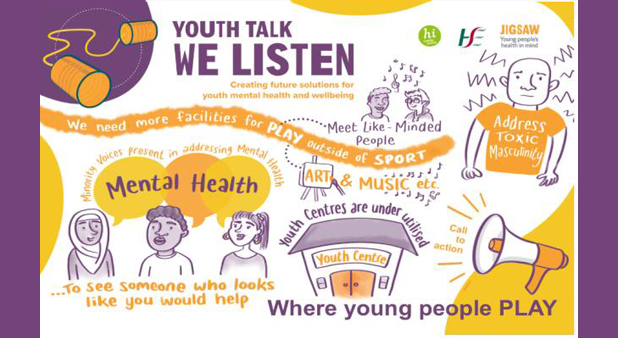
Youth Talk, We Listen
How Jigsaw involved young people in an online youth mental health event ‘Youth Talk, We Listen’
Read
Consultation on Tusla Services for Children
How young people from were involved in developing key messages for adults who deliver services to children and young people.
Read
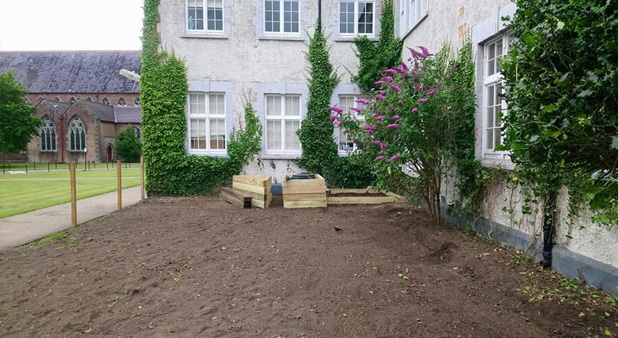
The Voice of Children in a Community Garden
How Kerry Local Creative Youth Partnership involved children in a lunchtime and after-school garden project in a primary school.
Read
UNICEF – EU – DCEDIY Collection of Case Studies
Report on the development of a collection of good practice case studies on children and young people’s participation in decision-making.
Read
Everyday Participation in Service Provision
How the Irish Wheelchair Association involves young people in day-to-day decision-making in its young adult services.

Read
Everyday Spaces in a Classroom
How a primary school teacher ensures that children are given a voice in decision-making on what happens in the classroom every day.
Read
Children’s Voice in Pre-School Project
At Creative Kids & Co., the most important aspect of our work is children’s participation in decision-making in their own learning.

Read
Youth Voice in School Leavers Programme
The topic was identified by two youth workers, based on interactions with young people facing the transition from second-level education.

Read
Youth Voice in a Climate Justice Plan
In October 2019, Foróige’s Reference Panel identified climate justice as an issue affecting all of society and young people in particular.

Read
Youth Involvement in a LGBTI+ Youth Strategy
Young people’s involvement in implementing the world’s first LGBTI+ youth strategy.
Read
Youth Voice on Living in Special Care
Young people’s involvement in improving the experience of living in Ballydowd Special Care Unit.

Read
A Child’s Experience of Being Listened to by a Vet
How the vet ensured that the child was given Space, Voice, Audience and Influence.

Read
Youth Voice in a Halloween Programme
Young people’s involvement in the development of a Halloween Programme in Lava Javas Youth Café, Limerick City.
Read
A Parent’s Story
A parent’s story about the impact on children of having their voices heard.

Read
Students Voice on a New Uniform
Students’ involvement in deciding on a new uniform in Salerno Secondary School, Co. Galway.

Read
Setting up an Advisory Group for Consultations on the Review of the GYDP
The Advisory Group met five times over the six-month timeframe of the consultation process.
Read
Report on Consultations with Young People Engaged in Garda Youth Diversion Projects
GYDPs are community based, multi-agency, youth crime prevention initiatives.
