
How Children Take Part in Decision-making in a Junior Infants Classroom
A Junior Infants teacher in St. Oliver Plunkett’s National School gives the children in her class a voice in decision-making as often as possible. The junior infant children are new to school and very young, so this happens in very simple yet effective ways. The voice of the child in decisions-making is established in this teacher’s class from the very first day of school.
On the first day of school, she gives each child an individual school teddy that they leave in school. These teddies can be used as breathing buddies when children are upset, story buddies during story time, and to help them have a voice in decision-making.
On the first day of term, she invites the children to sit it a circle and explains that they will have a morning check-in at the start of every day and a check-out at the end of every school day. She introduces the idea of a ‘speaking object’ at the beginning of every meeting and the children choose what object will become the ‘speaking object’. Only the child holding the object may speak, so every child has a chance to have their voice heard.
The morning check-in meeting is used as an emotion check in and for the children to discuss and make decisions about:
• Which book do they want to read?
• Which movement break do they want?
• Which movie will they watch during lunchtime?
• Which play station will they play at during play-based learning time?
The afternoon check-out meeting is used as an emotion check in and for the children to:
• Reflect on the day and share their views.
• Suggest any changes they want in the classroom.
• Address things that happened during the day (explained below).
If a child wants to discuss an issue during the school day and the teacher or another child cannot listen respectfully due to classwork, being outside, not having the time etc., a note is written on the ‘to be discussed’ board. The teacher explains to the children that issues written on the ‘to be discussed board’ will be addressed during the check-out meeting to avoid the child feeling unheard or disrespected.
As the year progresses, the teacher introduces more ways of empowering the children to have a voice in decisions made in Junior Infants.
1. When choosing which book they will read, the children can place their school teddy beside the book of their choice.
2. The teacher uses coloured mats for the children to vote on which movement break they would like to experience during the day. The teacher gives them a variety of options, for example, ‘children who would like to do Cosmic Yoga stand on the green mat, the children who would like to do a Go Noodle dance can stand on the yellow mat’, etc.
3. She uses pegs with the children’s names for them to vote on where they would like to play. For example, children who would like to play on the small world station peg their names on the red ribbon, children who would like to play with the water peg their names on the yellow ribbon, etc.
4. Another voting method is to put the children’s names on lollipop sticks which can be placed in coloured buckets representing different activities or stories – e.g. if a child wants to pick Peter Pan as the story, they put their lollipop stick in the red bucket.
5. The teacher also uses sticky dots for children to vote, or drawing smiley faces, or the interactive whiteboard on which children can move pictures and names with their fingers.
The children often make very practical suggestions about how their voices can be heard in the classroom. These suggestions are always heard and implemented as much as possible.
How the children were ensured SPACE, VOICE, AUDIENCE and INFLUENCE
Space: 

|
|---|
Voice:

|
|---|
Audience:

|
|---|
Influence:

|
|---|
More Case Studies
Read
How Parents can Enable a Toddler to Make Decisions at Storytime in the Home
How Parents can Enable a Toddler to Make Decisions at Storytime in the Home
Read
How Parents can Involve Babies, Toddlers and Young Children in Decision-making Through the Support of Tusla Family Support Baby and Toddler Groups
How Parents can Involve Babies, Toddlers and Young Children in Decision-making Through the Support of Tusla Family Support Baby and Toddler Groups
Read
How Young Children with Additional Needs are Involved in Decision-making in a GAA Club
How Young Children with Additional Needs are Involved in Decision-making in a GAA Club
Read
How 3-5-year-old Children have a Voice in Decision-making in a Gymnastics Programme
How 3-5-year-old Children have a Voice in Decision-making in a Gymnastics Programme
Read
Listening to and Acting on Young Children’s Lived Experience of Domestic Violence and Abuse
Listening to and Acting on Young Children’s Lived Experience of Domestic Violence and Abuse
Read
A Hub na nÓg Multi-method Approach to Consult with 3-year-old Children on What is Important in their Lives to Inform Policy Decisions
A Hub na nÓg Multi-method Approach to Consult with 3-year-old Children on What is Important in their Lives to Inform Policy Decisions
Read
How Infants and Non-speaking Children are Involved in Decision-making About Their Healthcare Needs in Emergency Departments that Treat Children
How Infants and Non-speaking Children are Involved in Decision-making About Their Healthcare Needs in Emergency Departments that Treat Children
Read
How Children in an After-school Service are Involved in Decision-making
How Children in an After-school Service are Involved in Decision-making
Read
Enabling Children to Choose the Clothes They Wear in an Outdoor Preschool
Enabling Children to Choose the Clothes They Wear in an Outdoor Preschool
Read
Young Voices on Communicating Physical activity: How Secondary School Students Co-created a Toolkit for the ‘Active Schools Flag’ programme
How children make choices about when to finish an activity or a game

Read
Ensuring Children Can Choose How to Say ‘Hello’ and ‘Goodbye’
Ensuring Children Can Choose How to Say ‘Hello’ and ‘Goodbye’

Read
Children Choosing Their Weekly Jobs in a Pre-school
Children Choosing Their Weekly Jobs in a Pre-school

Read
How Children are Ensured a Voice on When to Eat and What to Eat at Snack Time
How children are ensured a voice on when to eat and what to eat at snack time

Read
How Children Can Make Decisions on Their Own Meal Choices
How a preschool provides breakfast and lunch for the children every day, based on their own choices.

Read
Risky & Adventurous Play
How children make choices about when to finish an activity or a game

Read
Work in Progress Signs
How children make choices about when to finish an activity or a game

Read
How Babies, Toddlers and Young Children had Voice in Decision-making in the Design and Delivery of a Dance Curriculum
How a dance facilitator created the conditions for babies, toddlers, and young children to have a voice in decision-making.
Read
Empower Kids (Barnardos) Case Study
How Barnardos involved children and young people who experienced childhood domestic violence and abuse in service and policy decision-making
Read
Analysis of Youth Creative Participation (LCYP Laois Offaly)
How children and young people were involved in research analysing youth creative participation and engagement

Read
Hear our Voices!
These instructions will ensure children’s views are listened to and considered in every aspect of The Ark and beyond!

Read
Decision-making in Galway Community Circus
How children and young people are involved in decision-making in Galway Community Circus.
Read
Involving Traveller Children and Young People in Decision-making
How Involve Youth Project involves Traveller children and young people in decision-making in their day-to-day programmes and activities.

Read
Developing a School Charter
How the Irish Secondary Students Union (ISSU) involved young people in the development of a charter for inclusive schools.

Read
Everyday Participation in Family Support Programme
How a family support service listens to and acts on the views of children during their engagement in a family support programme.
Read
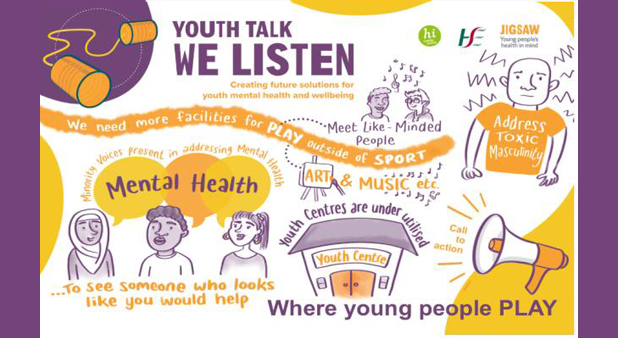
Youth Talk, We Listen
How Jigsaw involved young people in an online youth mental health event ‘Youth Talk, We Listen’
Read
Consultation on Tusla Services for Children
How young people from were involved in developing key messages for adults who deliver services to children and young people.
Read
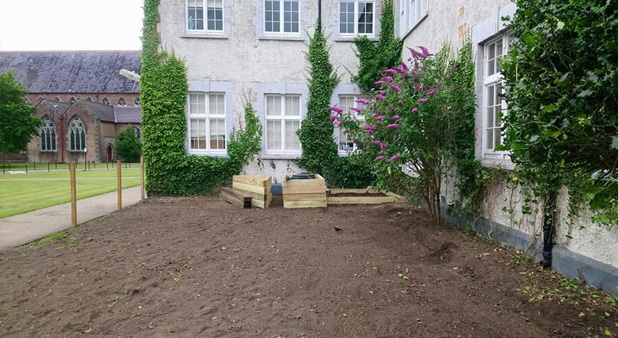
The Voice of Children in a Community Garden
How Kerry Local Creative Youth Partnership involved children in a lunchtime and after-school garden project in a primary school.
Read
UNICEF – EU – DCEDIY Collection of Case Studies
Report on the development of a collection of good practice case studies on children and young people’s participation in decision-making.
Read
Everyday Participation in Service Provision
How the Irish Wheelchair Association involves young people in day-to-day decision-making in its young adult services.

Read
Everyday Spaces in a Classroom
How a primary school teacher ensures that children are given a voice in decision-making on what happens in the classroom every day.
Read
Children’s Voice in Pre-School Project
At Creative Kids & Co., the most important aspect of our work is children’s participation in decision-making in their own learning.

Read
Youth Voice in School Leavers Programme
The topic was identified by two youth workers, based on interactions with young people facing the transition from second-level education.

Read
Youth Voice in a Climate Justice Plan
In October 2019, Foróige’s Reference Panel identified climate justice as an issue affecting all of society and young people in particular.

Read
Youth Involvement in a LGBTI+ Youth Strategy
Young people’s involvement in implementing the world’s first LGBTI+ youth strategy.
Read
Youth Voice on Living in Special Care
Young people’s involvement in improving the experience of living in Ballydowd Special Care Unit.

Read
A Child’s Experience of Being Listened to by a Vet
How the vet ensured that the child was given Space, Voice, Audience and Influence.

Read
Youth Voice in a Halloween Programme
Young people’s involvement in the development of a Halloween Programme in Lava Javas Youth Café, Limerick City.
Read
A Parent’s Story
A parent’s story about the impact on children of having their voices heard.

Read
Students Voice on a New Uniform
Students’ involvement in deciding on a new uniform in Salerno Secondary School, Co. Galway.

Read
Setting up an Advisory Group for Consultations on the Review of the GYDP
The Advisory Group met five times over the six-month timeframe of the consultation process.
Read
Report on Consultations with Young People Engaged in Garda Youth Diversion Projects
GYDPs are community based, multi-agency, youth crime prevention initiatives.
